Languages
How long does it take to learn Spanish?
Updated
About 1,200 hours of study for an English speaker to reach professional working proficiency. The US Foreign Service Institute plans 30 weeks for Spanish, each with 23 hours of class and 17 hours of self-study. At an hour a day that is a little over three years, and you can follow learner-friendly Spanish after about 150 hours.
When you reach each level
Dreaming Spanish, a course built on listening and reading, measures progress in hours of input. The Foreign Service Institute counts classes and homework for full-time students. Both are estimates.
- Know some common words
- 50 hours
Level 2 of the Dreaming Spanish roadmap, at about 300 known words.
- Follow topics adapted for learners
- 150 hours
Level 3, at about 1,500 known words.
- Understand someone speaking patiently
- 300 hours
Level 4, at about 3,000 known words.
- Understand native speakers at normal speed
- 600 hours
Level 5, at about 5,000 known words.
- Comfortable with daily conversation
- 1,000 hours
Level 6, at about 7,000 known words.
- Professional working proficiency
- 1,200 hours
The FSI’s 30 weeks of 23 class hours (690) and 17 hours of self-study (510).
- Use it for all practical purposes
- 1,500 hours
Level 7, the top of the roadmap, at 12,000 known words or more.
| Level | 15 min a day | 30 min a day | 1 hour a day | 2 hours a day |
|---|---|---|---|---|
| Know some common words (50 hours) | 7 months | 3½ months | 7 weeks | 4 weeks |
| Follow topics adapted for learners (150 hours) | 20 months | 10 months | 5 months | 2½ months |
| Understand someone speaking patiently (300 hours) | 3 years 3 months | 20 months | 10 months | 5 months |
| Understand native speakers at normal speed (600 hours) | 6 years 7 months | 3 years 3 months | 20 months | 10 months |
| Comfortable with daily conversation (1,000 hours) | 10 years 11 months | 5 years 6 months | 2 years 9 months | 16 months |
| Professional working proficiency (1,200 hours) | 13 years 2 months | 6 years 7 months | 3 years 3 months | 20 months |
| Use it for all practical purposes (1,500 hours) | 16 years 5 months | 8 years 3 months | 4 years 1 month | 2 years 1 month |
What makes it faster or slower
- Languages you already know Dreaming Spanish says its hours are for speakers of European languages. Speakers of another Romance language, such as French or Italian, can roughly halve them, and people who know no related language need about twice as many.
- How you study The FSI’s full-time students do 23 hours of class and 17 hours of self-study a week. Input courses count hours of listening and reading instead.
- Ability and experience The FSI says the actual time varies with a learner’s natural ability, earlier language learning and time in the classroom.
Track your Spanish hours
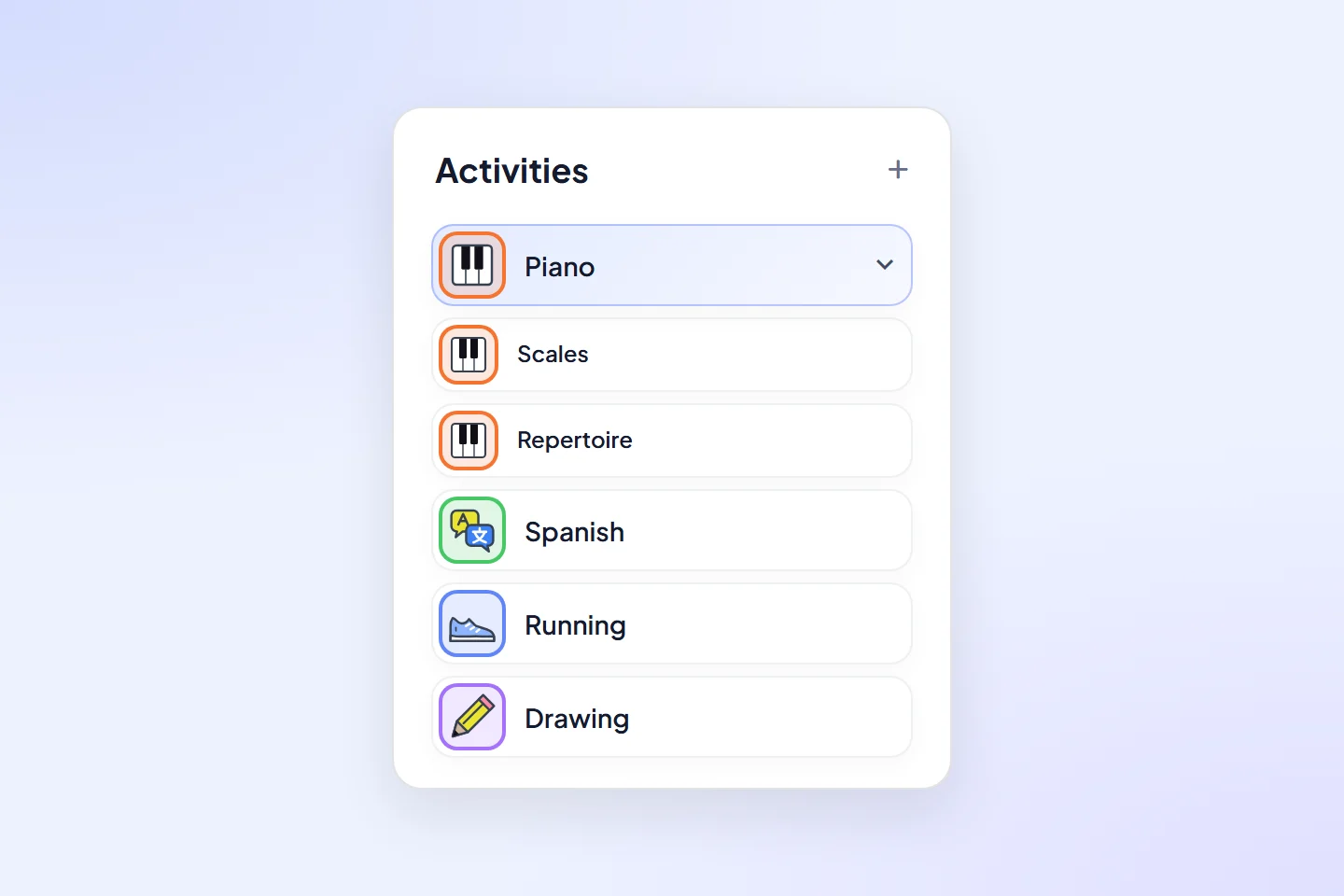
Add Spanish to 10k with sub-activities such as Input, Speaking and Class. Every session adds to your total, a daily goal keeps you going, and 10k milestones at 50, 300 and 1,000 hours line up with Dreaming Spanish levels 2, 4 and 6.
Questions and answers
Is Spanish hard for English speakers?
It is one of the easiest. The FSI puts Spanish in Category I, the languages closest to English, with 30 weeks of training. Japanese, Korean, Arabic and Mandarin get 88 weeks.
Can I learn Spanish in 3 months?
Three months at two hours a day is about 180 hours. That is enough to follow Spanish adapted for learners, which Dreaming Spanish puts at 150 hours, but not to understand native speakers at normal speed, which it puts at 600.
How many hours a day should I study?
Any daily amount adds up, and the table shows how long each pace takes. The FSI’s full-time students put in about 40 hours a week.
Does watching Spanish TV count?
Input courses such as Dreaming Spanish count hours of watching and listening as their main measure. Classroom estimates like the FSI’s count classes and homework.
Sources
Related pages
- How long does it take to learn a language?
Hours for every CEFR level, and how the FSI ranks languages.
- Daily goals
Set a daily target and watch the progress bar fill as you practice.