Languages
How long does it take to learn a language?
Updated
About 200 hours of guided study per level, by Cambridge English’s estimates. That is 350 to 400 hours from scratch to B1, and 1,000 to 1,200 hours to C2. For English speakers, the US Foreign Service Institute plans 24 weeks of full-time training for languages like Spanish or Dutch and 88 weeks for Japanese, Korean, Arabic or Mandarin.
When you reach each level
Cambridge English estimates the guided learning hours needed to reach each level of the Common European Framework of Reference (CEFR) from beginner. Its figures are for learners of English, and it calls them a guideline: you may need more or less.
- A2: everyday basics
- 180 to 200 hours
Simple, routine exchanges of information on familiar matters.
- B1: most situations while traveling
- 350 to 400 hours
Deal with most situations likely to come up while traveling where the language is spoken.
- B2: talk with native speakers
- 500 to 600 hours
Talk with native speakers often, without strain for either side.
- C1: work and study
- 700 to 800 hours
Use the language flexibly and effectively for social, academic and professional purposes.
- C2: near-native
- 1,000 to 1,200 hours
Understand with ease virtually everything heard or read.
| Level | 15 min a day | 30 min a day | 1 hour a day | 2 hours a day |
|---|---|---|---|---|
| A2: everyday basics (180 to 200 hours) | 2 years 2 months | 13 months | 7 months | 3½ months |
| B1: most situations while traveling (350 to 400 hours) | 4 years 5 months | 2 years 2 months | 13 months | 7 months |
| B2: talk with native speakers (500 to 600 hours) | 6 years 7 months | 3 years 3 months | 20 months | 10 months |
| C1: work and study (700 to 800 hours) | 8 years 9 months | 4 years 5 months | 2 years 2 months | 13 months |
| C2: near-native (1,000 to 1,200 hours) | 13 years 2 months | 6 years 7 months | 3 years 3 months | 20 months |
How the FSI ranks languages for English speakers
The US Foreign Service Institute trains American diplomats with 23 hours of class and 17 hours of self-study a week, until they reach professional working proficiency in speaking and listening. Its current figures are lower than the ones most websites still quote.
- Category I, 24 to 30 weeks (552 to 690 class hours) Spanish, French, Italian, Portuguese, Dutch, Danish, Norwegian, Swedish and Romanian.
- Category II, about 36 weeks (828 class hours) German, Indonesian, Malay, Swahili and Haitian Creole.
- Category III, about 44 weeks (1,012 class hours) Russian, Polish, Greek, Hindi, Turkish, Vietnamese, Thai, Ukrainian and many more.
- Category IV, 88 weeks (2,200 class hours) Arabic, Mandarin, Cantonese, Japanese and Korean.
What makes it faster or slower
- How close the language is to yours The FSI’s Category I languages, the closest to English, take about a third as long as Category IV.
- How much you study and hear the language Cambridge lists the intensity of your study and how much you study or hear the language outside lessons among the main factors.
- Your age and background Your age and your language learning background change the hours too, Cambridge says.
Track your language hours
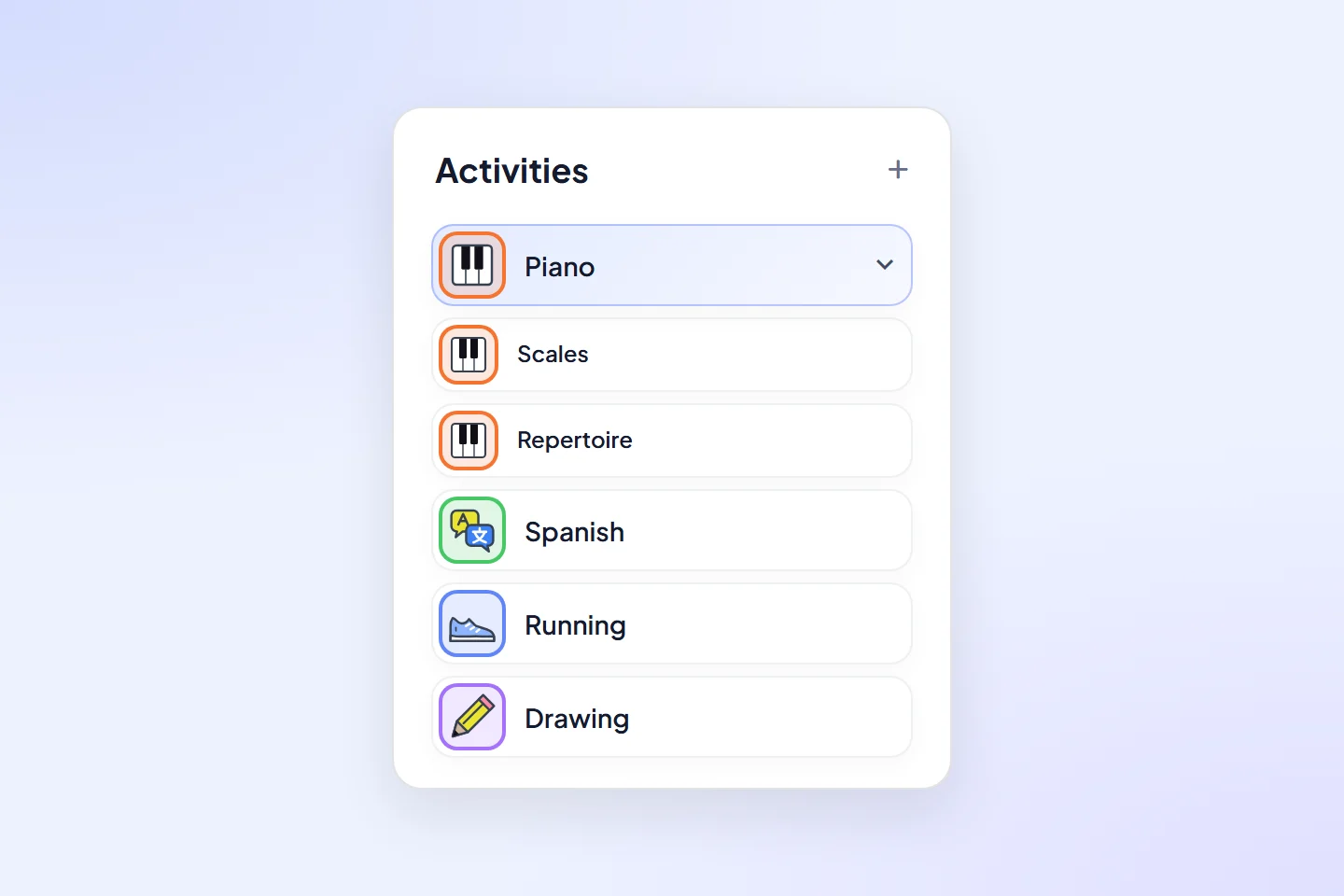
Add each language to 10k as its own activity, with sub-activities such as Class, Input and Speaking. Your total for each language sits next to the estimates above, and milestones at 300, 500 and 1,000 hours mark the way.
Questions and answers
What is the fastest language to learn for English speakers?
The FSI’s Category I languages, the closest to English: Spanish, French, Italian, Portuguese, Dutch, Danish, Norwegian, Swedish and Romanian, with 24 to 30 weeks of full-time training.
What is the hardest language for English speakers?
Arabic, Mandarin, Cantonese, Japanese and Korean, the FSI’s Category IV: 88 weeks of training, about three times as long as Spanish.
How many hours a day should I study?
Any daily amount adds up, and the table shows how long each level takes at 15 minutes to 2 hours a day. FSI students study about 40 hours a week.
Do apps, podcasts and series count?
Cambridge’s figures count guided study with a teacher, while input courses such as Dreaming Spanish count hours of listening and reading. Both kinds of hours add up, but they are not the same hours.
Sources
Related pages
- How long does it take to learn Spanish?
About 1,200 hours to professional working proficiency.
- Milestones
21 milestones from your first hour to 10,000 hours.